
Blown-in insulation in Sparks NV - an even layer over a sound, sealed attic
Drafty rooms, a hot upstairs and a high power bill usually start in the attic. We seal the gaps and blow in an even layer.
Request an estimate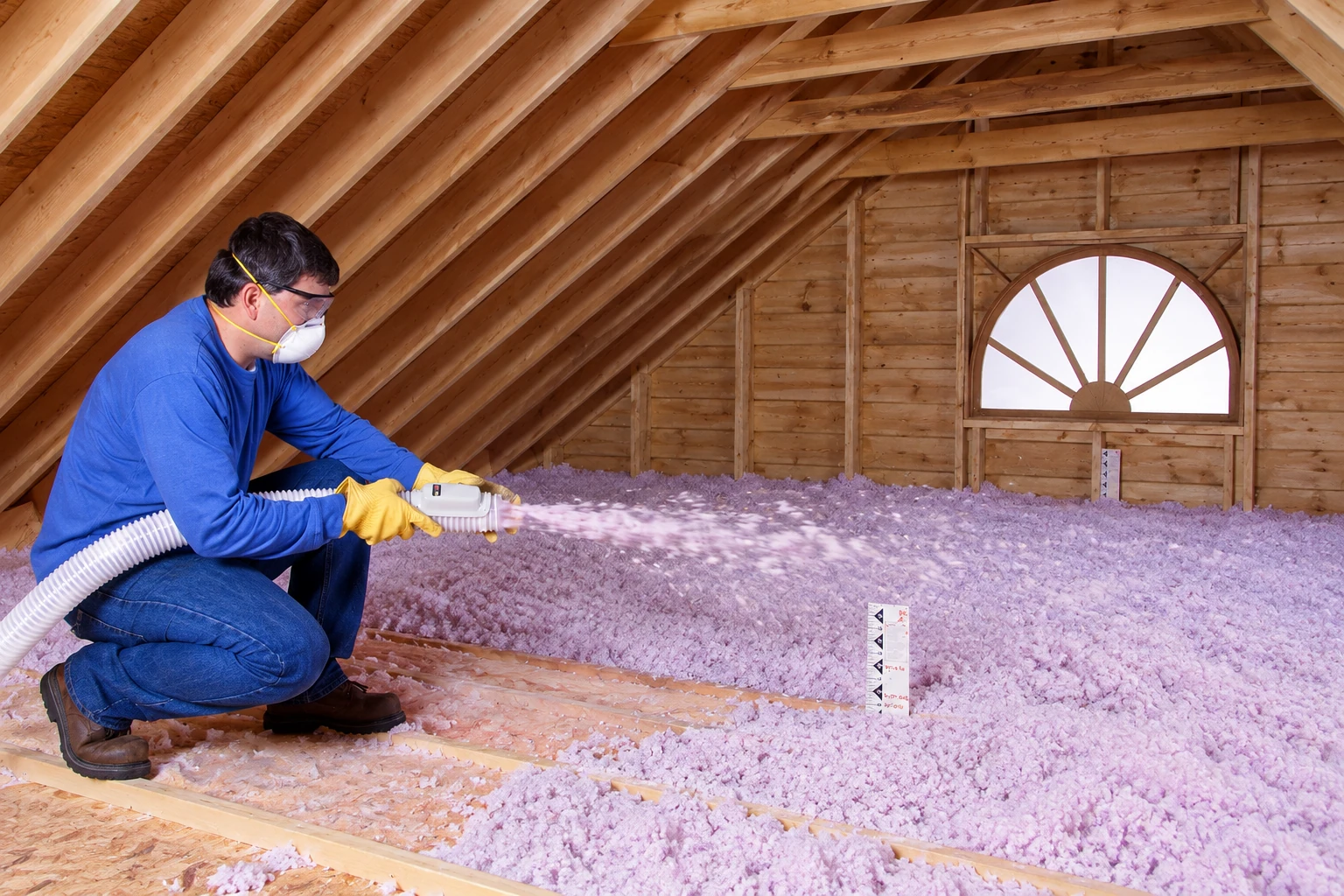
Is my attic ready for blown-in insulation?
Blown-in insulation is loose fill, usually cellulose or fiberglass, blown through a hose across your attic floor so it settles into an even blanket that slows heat moving through the ceiling. In Sparks, it's the usual fix for a house that's hot upstairs in summer and drafty in winter, as long as the attic is dry and sound before it goes in.
Most attics I look at already have some insulation, just not much, and it's settled thin over the years. The first thing I decide is whether yours can take a new layer now or needs a repair or a test first, because that's what sets your schedule. The price mostly comes down to the size of the attic, how many inches are already up there, how much attic air sealing the ceiling needs, and whether any old material has to come out. I come out and look in person, so you get a number for your house and not a guess over the phone.
How we do blown-in insulation
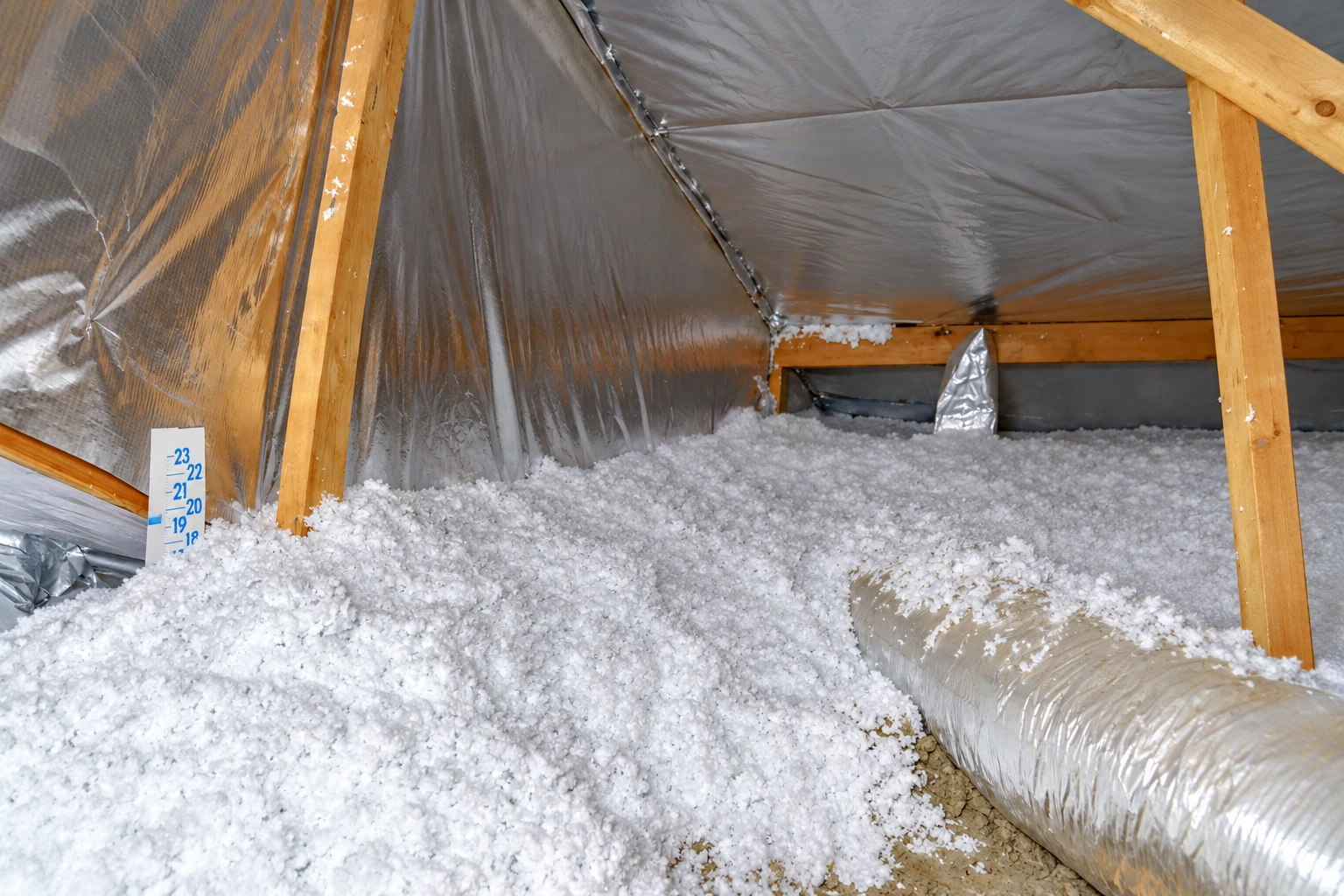
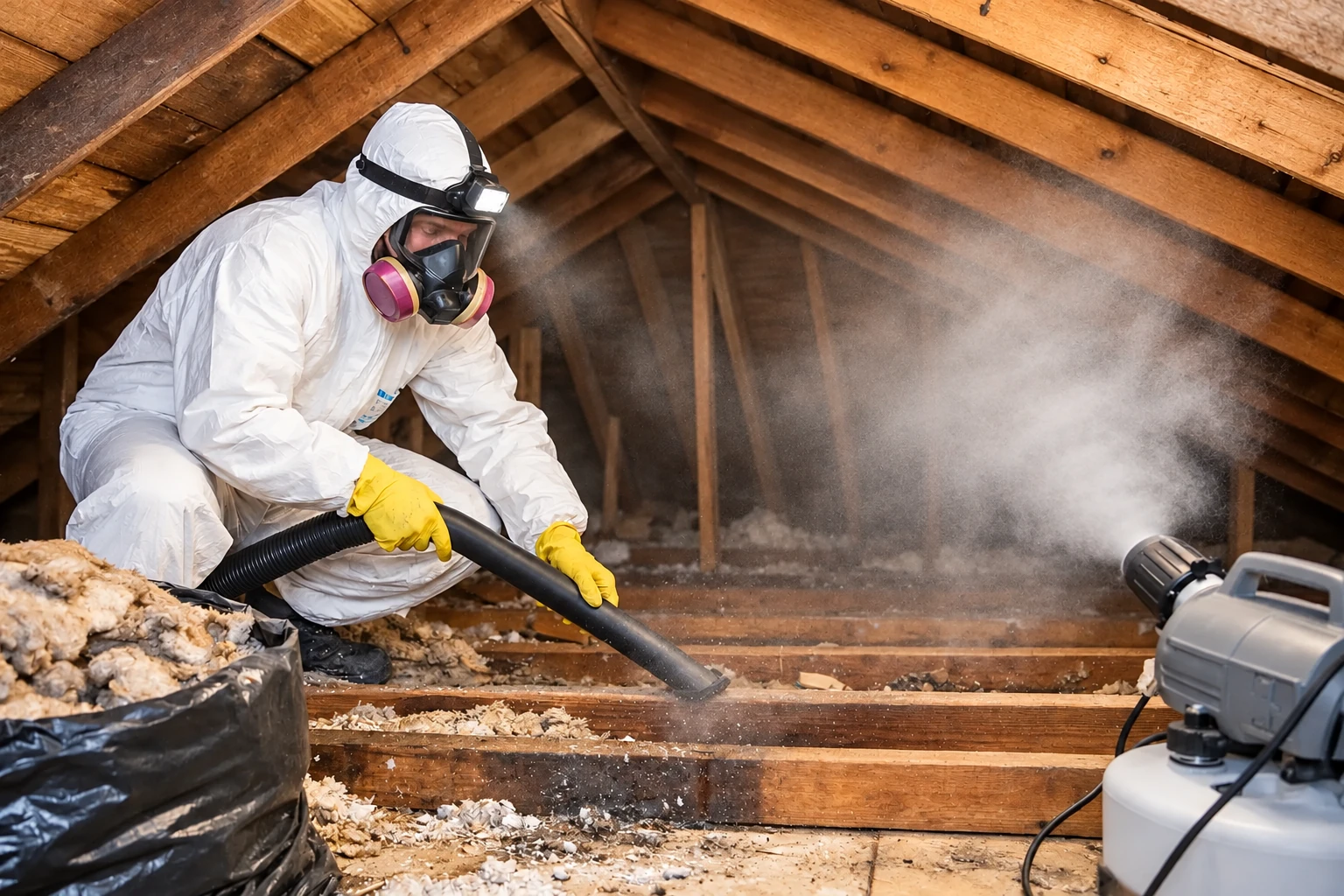
I start in the attic with a flashlight, checking how deep the old insulation is, whether it's dry and clean, and where your gas appliances get their air, since tightening up a house changes how they breathe. If the old layer is dry and clean, we can usually blow new material right over it, but if I find wet insulation, old wiring or anything that looks like vermiculite, we stop and sort that out with you first. Once the attic is ready, our crew seals the gaps around light fixtures, pipes, wires and the hatch, because insulation can't do much against air leaking right through it. We set baffles at the eaves, which are guides that keep the vents open so the attic can still breathe, then blow the fill to an even depth all the way out to the edges, where a lot of attics run thin. We clean up and show you what's up there before we leave.
Blown-in work often ties into the rest of the house. If cold floors or the room over the garage are part of the problem, we look at home insulation for the walls and crawl space too, so you're not fixing one spot and leaving the next. When old insulation is soaked, full of droppings or flattened past saving, insulation removal comes first, because new fill over a bad layer just keeps the problem.
What blown-in insulation in Sparks has to meet
The City of Sparks keeps a list of work that needs a permit, and it names things like roofing, furnaces and new plumbing or electrical, not blown-in insulation, so that list alone doesn't settle whether your job needs one. Before we start, we check with the city or county office for your address, tell you what it asks for, and take care of the permit when your job needs one. Sparks also builds to a current energy code with northern Nevada amendments, and new attic insulation should meet or exceed today's code, so that's the standard we plan the job around.
A lot of houses here were insulated once when they were built and left alone since, so we find settled fill, gaps around old light fixtures and gas appliances that need their fresh air left alone. We see the same attics on jobs in Reno and Spanish Springs, and we work across the Reno and Sparks area and the cities around it, out to Carson City, Fernley and Truckee, CA. If you don't see your city, just ask.
Blown-in attics, up close
Get your attic checked for blown-in insulation
We'll reply within one business day to set a time, and I'll come out to look at your attic in person. The estimate is free and done at your house, with no obligation to go ahead.
(775) 447-1072Blown-in insulation questions from Sparks homeowners
How much does blown-in attic insulation cost in Sparks, NV?
Attic insulation in Sparks usually costs about $1,500 to $4,900 per job, and that's the going rate around town, not a price of ours. Where your house lands depends on what I find up there, which is why I look in person before giving you a number.
Can blown-in insulation go over my old fiberglass batts?
Yes, loose fill can go right on top of existing fiberglass batts or blankets, as long as they're dry and clean. It takes a blowing machine to spread it evenly, which is one reason hiring a professional is usually the smarter call.
What should be fixed in the attic before adding insulation?
The standard advice is to have a professional fix wet insulation, moldy framing, vents that blow moist air into the attic and old knob and tube wiring before new insulation goes in. Knob and tube wiring can be a fire hazard when insulation touches it, so repairs come first and insulation comes after. If a roof leak is behind the wet spots, I'd rather you fix that first than pay us to cover it.
How do I handle vermiculite insulation in my attic?
Have it tested by an approved lab before anyone disturbs it, because vermiculite, the light, flaky gray mineral some older attics have, may contain asbestos. If I see anything that looks like it, we stop, and testing goes first on the schedule before we talk about blowing anything in.
How do I check an insulation contractor's license in Sparks?
Use the contractor license search linked from the city's building permit page, where you can look up a license number, principal name, company name or disciplinary action. It's worth doing before anyone starts work on your house.
What is the best way to insulate around recessed lights in the attic?
The usual guidance is to keep insulation at least 3 inches from recessed can lights unless they're rated IC, which stands for insulated ceiling. With loose fill, that means a sheet metal or wire mesh barrier around each light opening so the fill stays clear of it.
Call about your Sparks attic today
We're open into the evening and on weekends, so call (775) 447-1072 or use the form when you're home, and tell us about attic access, any wet spots or vermiculite, and your gas appliances so I come prepared.